03 April, 2006

Portraits in the Italian style

so you get to see a fraction of what I did while I was away...

28 March, 2006

Last night I planted a seed

Last night, wriggling in my childhood bed, under the dark silhouette of the old cedar tree that stands in front of my mother's house, I planted a seed.

I would have said lunar silhouette, but there was no moon last night, so these thoughts were not inspired by madness, but rather by the warm air of the awakening spring. And maybe the tannin of the copious amounts of red wine downed to celebrate my mum's birthday.

Something popped in my head like a bubble ready to burst, and this seed stretched its first tiny root into the fertile ground. This world that surrounds me and us all. The emotions. The ideas. The people. How ironic that this should happen in my childhood bed.

For the record, it was 2:08 am CET, 28 March 2006. For the record, it was a Tuesday. For the record, there was no moon (did I mention this already? I think it's important). One day these things will matter. People will want to know. They will want to understand if last night was a good time to plant seeds. Or to dream of a different world.

25 March, 2006

I want to build my own house...


... just the way Will did it... well, more or less. I don't have half a grand to blow away on eco-building, nor do I have plans to sell my flat in London. But like Will and many others, who are to me a constant source of inspiration, all I need is a bit of determination to do something more concrete about the things I care for, such as reconverting Exmouth Market and Santa Caterina in fully sustainable households. It won't be easy or quick, but one step at the time and I know I'll get there!

24 March, 2006

Minsk, Paris, Genoa...

From the BBC website:

"Riot police in the Belarusian capital, Minsk, have broken up a five-day demonstration against the re-election of President Alexander Lukashenko. More than 100 troops poured into the central square and loaded protesters onto waiting trucks. [...] About 150 demonstrators were in the square when it was cleared. [...] According to an opposition presidential candidate who arrived at the square, all the women were allowed to leave".

This posting is dedicated to those brave men and women who stood for 5 days in the freezing streets of Minsk. You are not alone. The cities of Europe have long witnessed the brutality of these pigs. From Paris to Kiev, Genoa to London: no matter how hard they beat us, remember we are stronger than they will ever be.

22 March, 2006

a tattoo


Those who know me best are aware of my long-time obsession with getting a tattoo. Well, today I went for my first consultation with a tattooist, which means the clock is now officially ticking! But what hides behind this desire? Why would I want to go through the excruciating pain of a needle tearing through my skin to inject ink beneath its surface? Am I giving up - just like everybody else - to a fashionable trend? Why now? What on earth will I tattoo on my body? And where shall I inflict the pain? And will I regret it in 20 years time, when I am married with two kids and a labrador (yeah, right...!)?

Tony Lawrence, a graduate from Edinburgh University, wrote an interesting - if quircky - study on the topic, entitled A Tattoo is for Life: a Sociological Study of the Changing Significance of Tattoos. While this was not the most enlightening piece of research I have ever read, it still helped me answer the first question: why getting a tattoo in the first place?

1. Tattoos (just like dress/fashion) play a symbolic, communicative and aesthetic role in the presentation of the self. Our appearance is considered to be essential to the world of modernity and mass communication, to the point of being referred to as a kind of connective tissue of our cultural organism. In our everyday encounters we are subconsciously scanning people we come into contact with, in order to make sense of possible interactions that could arise at any given moment. So our perceptions of others and in fact ourselves is central to our understanding of part of the social world that is human symbolic interaction. Tattoos share an even greater intimate connection with the self than dress, being an expression of identity that is displayed on the skin and becomes part of the person we are or would like to be.

2. For men, tattoos operate in similar ways to uniforms, in that they display an individual's membership to a particular group in society, and are often found in very secluded, male-dominated environments, such as criminal gangs, armies and.. er... urban gay communities. However, within these tattooed groups there are wide differentiations. Having tattoos can sometimes ostracise an individual from other members of society who see the people with tattoos as deviant; similarly it can also open up a new world of people with a common interest, a select group. This ties in well with my obsession with individual vs. group identity in contemporary urban spaces, but also with my life-time quest to (re)define my social space.

3. Finally, Henk Schiffmacher in his book 1000 Tattoos states that “in the Western world tattoos are mainly associated with those belonging to a lower social class – criminals, sailors, whores, soldiers, adventurers, perverts and the like – and at the other end of the scale with the eccentrics of high society, the rich and aristocratic, intellectuals, artists and all those who make life more colourful”. Although this might no longer be the case, I like to think this perception has influenced my choice...

But have I given up to a passing trend? If this is a passing trend, then it's taking a hell of a lot of time to pass. Tattoos have been around in Europe for thousands of years, well before James Cook re-imported the practice from Polynesia in the XVIII century. Pre-Christian Ger-manic, Celtic and other European tribes were often heavily tattooed, and Julius Ceasar described the Picts as scarified with elaborate dark blue woad designs in his De Bello Gallico (54 BC). According to Robert Graves' study The Greek Myths, tattooing was also common in the Mediterranean, and was certainly present in Ancient Egypt, but the practice fell in disuse during the process of Christia-nization of Europe, accused of being linked to paganism. Today's fahion is simply a revival of a very old and established European prac-tice of body modification.

So why now? Well, as well as having some spare time, from the moment I turned 30 I have started feeling more in control of my life: I have become bolder in the choices I make and less terrified of their potential consequences. I have suddenly stopped worrying about pleasing/displeasing other people, and have developed a keen interest in pleasing myself. To give you an idea, here's a transcript of the last conversation I had with myself on the subject of tattoos:

- I really want a tattoo but...
- But what? Go on and get it!
- But... but what if... I mean...
- Who cares? Just do it!!!


At 30, I discovered mature recklessness.

The where? question is easy: my right calf. I've always known I'd get my first tattoo on my right leg. For a while I thought about getting it on my thigh, but it's a large and important piece of my body, and this being my first tattoo, I decided to save it for when I develop higher degrees of mature recklessness.

Now, the what? question. I don't like colourful drawings, so was naturally attracted to tattoos of Tahitian origin, like this one on the left. I like them because they are able to combine intricate designs with an overall simple appearance. But then, I thought about how my first tattoo should represent a watershed between what was before and what came after it. I thought it should say something about my past as a way to embrace it and move on. That's when I came up with the idea of incorporating graphics from the prehistoric inscriptions found in the upper valleys of my hometown into a tribal design.

Some of the incisions look like this:


Naturally, at this stage, it's hard to imagine what the final product will look like. But that's what Jay Jay's got to figure out... And he better be a light hand when he sticks that needle in my body...!!!!! As for regrets... what if I regret not getting a tattoo in 20 years time? I'll think I'll take my chance on the tattoo instead...

ドラムマシーン

drum machine

There are moments

when my head is full of smelly stuff
of broken thoughts
and heavy liquid

液

when even music hurts like a claw

螯

when I only seek silence

静寂

and when I find it
I only seek noise

囂囂

there are moments
when friends are strangers
and lovers forgotten

忘却

when everything is
empty and frantic

物狂おしい

21 March, 2006

Who ever loved, that loved not at first sight?

It lies not in our power to love or hate,
For will in us is overruled by fate.
When two are stripped, long ere the course begin,
We wish that one should love, the other win;

And one especially do we affect
Of two gold ingots, like in each respect:
The reason no man knows; let it suffice
What we behold is censured by our eyes.
Where both deliberate, the love is slight:
Who ever loved, that loved not at first sight?

C Marlowe

17 March, 2006

Music for those who are mourning...


First of all, I wanted to share with you the discovery of Broken Spindles, an initiative of Joel Petersen, whose main job is being the bassist to the '80s retro neo-new wave band The Faint, but who has also found some time to produce some really interesting pieces of electronic music under this label. On Saddle Creek's website, Joel reveals to us that "writing inside/absent (the title of the first album) I think I was hearing and experiencing a lot of outside art and music that made no emotional impression on me. I guess I wanted to at least make myself feel something through music, and it seemed that the best way to do that was just to be as real and honest as possible". The cover of the album, with its cubic, white man stretching his disproportionate limbs, seems to reinforce this need for desperate emotional longing. As you listen to This is an Introduction from his album inside/absent, you become captivated by the intimate, almost mournful feel of this minimalist electronic piece. Can't say the rest of the album is joyful either, but it's absolutely beautiful...


Trespassers William, which I discovered through my friend Mark, have been called "Gently mesmerizing... haunting" by NME, when their 2004 album Different Stars - with its influences of ambient, folk and shoegaze - established the band as one of the most prominent and nuanced US songwriters. You can download from this album And We Lean In clicking here. They are - if anything - improving, as you can hear from this haunting piece from their 2006 release Having.

13 March, 2006

This attraction I have to cycling

In 2004, 127 cyclists were killed and 15,749 injured on the roads of England and Wales. I was one of those 15,749. I was run over by a man called Jan Darsz, a talented - if a little dark - cartoonist of possible Polish descent. This one below, which he must have drawn a few days after knocking me down on Ludgate Circus, is entitled Super Heroes:


Well, today I got knocked off again, this time by a pedestrian who thought crossing Oxford Street didn't require looking out for oncoming traffic. Bless... I think my bike left on him as many bruises as it did on me. At first apologetic and sheepish, he then proceeded to rush off at the speed of light as I was crawling from underneath the bike frame, disappearing into the Underground before I had time to check the damage he had done. Fortunately, I only report a bruise on my left hand and another one below my left hip.

Whenever I tell people that I am a cyclist in London, they stick out their eyes and murmur "Oh, you're so brave", a claim which I instantly dismiss as ridiculous. I churn out statistics, data and urban legends to persuade them that really it is FAR more dangerous to use a toaster in the morning. But, inside, I revel in the idea that they really think I'm part of this cool club of people who risk their lives every day.

Yes, there's something about cycling that manages to tick all the right boxes in my head. I am doing the "right" environmental thing, which makes me feel good. I am being active and healthy, which makes me look good. I am not having to use the dreadful Underground or the overcrowded buses, which makes me feel VERY relieved. I am generally saving money, which can't be a bad thing. And I am surrounded by fellow cyclists who, unlike tube or bus users, are generally nice to each other: after 5 years cycling in London, I don't recall a single incident or argument involving another cyclist, but the list of clashes with motorists is endless. All these things, you'd think, are pretty compelling arguments to explain why I am such a cycling fanatic. Yet, I can't help thinking there is something else, something that goes deeper and that somehow touches a primordial chord inside me.

Much as I pride myself on being a social maverick, who hates labels and categories of any shape or form, I came to the conclusion that this attraction I have to cycling comes down to an identity void, to the need for a new kin in this urban sprawl that surrounds me. When I arrived in London, I was too old to do the whole tribal-exploration thing (or maybe I was always a little too cynical to do it in the first place). But soon my instincts must have kicked in, because I embraced cycling with the irrational dogmatism of a new convert. I instantly became part of this sect, easily identifiable on the streets, which - despite being itself split into many sub-species - is still very much a united group when relating to the others.

When I get on my bike and onto the road, my eye instinctively searches for other cyclists. At traffic lights, I study the movements of those who are lined up in front of me waiting for the green light, especially the couriers (the rare times they stop) performing their bizarre dances to avoid touching the ground with their feet. When I was run over, cyclists were the first ones to stop and inform themselves about my conditions. When buckets of water are pouring from the sky, we look at each other with a complicit and encouraging smile, that says: "Hang in there!", as much as "They don't know what they're missing out!". The glances that dog-owners exchange when walking their pets late at night under the rain must be the closest the non-cycling world gets to this feeling of human bonding and solidarity.

But there might be another explanation for this attraction I have to cycling. My father, you see, adored bicycles, and my happiest childhood memories of him revolve around cycling: him giving me my first bike, a light-blue Bianchi, and teaching me how to ride it; him sitting in front of the telly watching the Giro d'Italia or the Tour de France; us riding together to the bastions of the city castle and then rolling down the hill back home. Maybe genetics actually DO mean something. Maybe this is the legacy that my father left me. Or maybe this is my own way of keeping him alive inside me. In which case, this attraction I have to cycling is a tribute to him and to his lifetime passion.

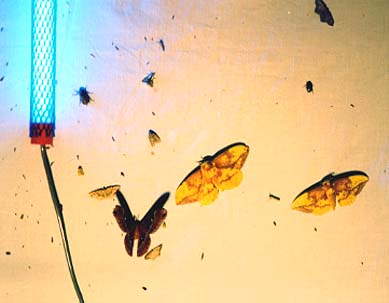
moths


Late at night, when stillness descends over London
I lay in my bed thinking about the meaning of all this.
Sometimes I wait for the waste-collection lorry to pass
to remind myself that things happen for a reason.
But like moths attracted to a lightbulb
these thoughts of futility keep on returning.

09 March, 2006

Considerations on Radicalism: is it right to do business with the devil?

I am about to start a consultancy with a friend, who heads the International Cooperation office of the Sicilian Regional Administration, to help them conceptualise and design a number of projects in the Mediterranean area. Most of their dealings in Tunisia seem to be with governmental offices and private companies, matter-of-factly bypassing an organised civil society, which experts of the calibre of Christopher Alexander from MERIP depict as too weak(-ened) to be effective. Ten years ago, the thought of working with Italian government officials would have simply made me puke. Then, as I browsed the Internet trying to gather information on the human rights situation in Tunisia, I started wondering whether my ethical standards had begun to wobble. In Helen Fielding’s satirical novel about aid workers, Cause Celeb, one of her characters wears a T-shirt set out like a multiple choice questionnaire for relief workers. It reads: (a) Missionary? (b) Mercenary? (c) Misfit? (d) Broken heart? Am I about to become a (b), a Mercenary, willing to trample all over my principles just to earn a few bucks?

I've always considered myself a radical. Wikipedia tells us that the term Radical has been used since the late 18th century as a label in political science for those favoring or trying to produce thoroughgoing political reforms which can include changes to the social order to a greater or lesser extent. Historically, early radical aims of liberty and electoral reform in Great Britain widened with the American and French Revolutions so that some radicals sought republicanism, abolition of titles, redistribution of property and freedom of the press. In the later 19th century in both the UK and continental Europe the term radical came to denote a progressive liberal ideology. Historical Radicalism should be distinguished from the modern usage of the word radical, which merely denotes political extremes of right or left, and which for simplicity we'll call here pseudo-radicalism. Needless to say, the relationship between historical radicalism and pseudo-radicalism has never been smooth:


From this starting point, if we look at the hugely diverse incarnations of progressive liberal ideologies today, we immediately realise that the clear-cut boundaries that defined political identities and ethics during the 19th and 20th centuries have now shifted entirely. In 1978 you could step into a philosophy lecture at the Sorbonne in Paris and know for a fact that you were surrounded by radicals (or pseudo-radicals). Today, instead, as a new wave of religious and ideological polarisation grips Europe, with skirmishes about creationism creeping inside British universities and resembling the theological clashes between Protestant Reformers and Catholic Counter-Reformers that preceeded the Thirty-Years' War, radicals like myself are left pondering which forces are on "our" side and which are against us. But, perhaps, posing the question in this antithetic manner is already misleading. Fifty years ago, wherever you looked, you knew the world had a dual structure: right and left, Communists and Capitalists, State and Market, Men and Women, everything was there to remind us that - just like the movies you went to see on Saturday night with your sweetheart - the world was black and white. Today things are not as clear: Neo-Cons and New-Labour, Third and even Fourth Sector, Transexuals, Transvestites and Metrosexuals. This is not a world that can be as easily split in half along its axis.

This vision of the past is of course hugely simplistic, but in social and political terms those past reference points really did help us identify our role models, our natural interlocutors, and most importantly our ethical identity and niche. Today, instead, no matter how many times pseudo-radicals insist on re-drawing this bi-polar map, some placing multinational corporations, others religious fanatics on the "other side" of the fence, I can't help thinking that they're wasting their (and my) time. There no longer is A fence, but countless fences, ditches, paths and bridges, which have turned our world into a far more complex, interconnected and frankly labyrinthine mechanism. It's as if we had acquired a sudden fourth dimension (or fifth if you consider time to be the fourth one), which escapes us all, because it moves faster than the speed of light in that twilight zone that has emerged with the end of the Cold War, the advent of the Internet and Globalisations' leap forward during the late 20th Century. It's as if Rubik's cube - which I have never been able to master, let alone draw ludic pleasure from - had suddenly turned into something like this...


Like those children's demons in Pullman's masterpiece His Dark Materials, radicalism is now assuming so many different shapes and forms, that you come across it in the most unexpected places. First you learn that those old chums at BP have been learning from rich kid Zac Goldsmith (himself a student of St Francis it appears) how to give their riches—and their fathers' and shareholders' riches—to the poor, planning to invest $8 billion into clean energy technologies over the next 10 years. Then you read that China has promised to close the divide between its new rich and the numerous poor still languishing in the immensity of its rural provinces, by building a 'new socialist countryside' (which makes me wonder: what the hell have they been up to since 1949?!?!). So, as radicalism starts spilling into some previously-uncharted territories, turning multinational corporations and autocratic governments into the brains and hands of radical social change, I had to ask myself the following question: at which point should we apply old ethical limits to this new unbounded world? Or, in other words, is it morally right to do business with the devil if we think this might do some greater good to the world?

I have two friends who are real hippies. They met while volunteering at Sunseed a few years ago, and were so committed to their environmental beliefs that they cycled there and back from Newcastle! I had a conversation with them a few months ago, during one of their rare visits to London, on the importance of sticking to your principles at whatever cost. For them, there was no middle ground: you either pollute, or you don't. The technology is there, the rest is down to will-power, moral coherence and gutts. But what happens - I asked - when you just HAVE to compromise? When you are sent to work on a humanitarian project in Africa and you simply CAN'T cycle there!" For them, the answer was simple. If you compromise once, you won't be able to stop compromising. At the end of your life, you'll look back and see how you've trampled all over your principles. When I left them, I couldn't help feeling rather sheepish, wondering if it was already too late for me to live up to my principles, and calculating how many times I could actually afford going back home every year if instead of booking a seat on the usual Ryanair carnage I were to cycle from London to Tuscany over the Alpine glaciers...


But it really ain't that simple. My flatmate Paul - with his usual native-American wisdom - says it's naive to see the world in this black-and-white manner, but the temptation to edge towards pseudo-radicalism or outright extremism, especially at this time of heightened tensions between contrasting ideologies, is always huge. Surrounded by a sea of seemingly demented fanatics - from Christian Evangelists trying to prevent the BBC from broadcasting Jerry Springer the Opera, to British Muslims chanting "Europe you'll come crawling when the Mujahideen come roaring" at an anti-Danish cartoons rally in London back in February - I am left wondering whether my political scruples have no place in today's world. In the words of that enlightened US president George Dubya Bush, if "you are either with us or against us", where does that leave us, old-fashioned radicals who want to bring deep change to this world without necessarily signing up to an Al-Qaeda or US military training camp?

Paradoxically, I think working across these ideological barriers might have become the new radicalism. As more and more people become entrenched in their moral highground, embracing Islamism, or environmentalism, or whatever other -ism takes their fancy, radicals like myself are forced to triple jump from one political/ideological sky-scraper to another one. If there aren't - as I suspect - two simple sides to the argument, but countless one-sided views, then siding with anyone equals embracing a political conservatism that is diametrically opposed to the progressive liberal ideology I believe in. This means, at times, accepting to work alongside (but not inside) the bureaucracy of a hugely corrupt Italian government willing to develop links with a repressive North African state. It means doing this without forgetting what my liberal principles are and trying at all times to advance my progressive radical agenda. The alternative would be to barricade myself inside an ideological (and of course environmentally sustainable) ivory tower, complacent with my ethical choices but ultimately powerless beyond the four walls of my high-rise.

Er... is this a diabolic snigger I hear in the distance...? Must stop wearing hemp clothes...

Why you should have a lesbian housekeeper


I should make love to you violently behind a palm tree, dear...

From the everclassic masterpiece Rebecca by AH...

07 March, 2006

Another French victory...!


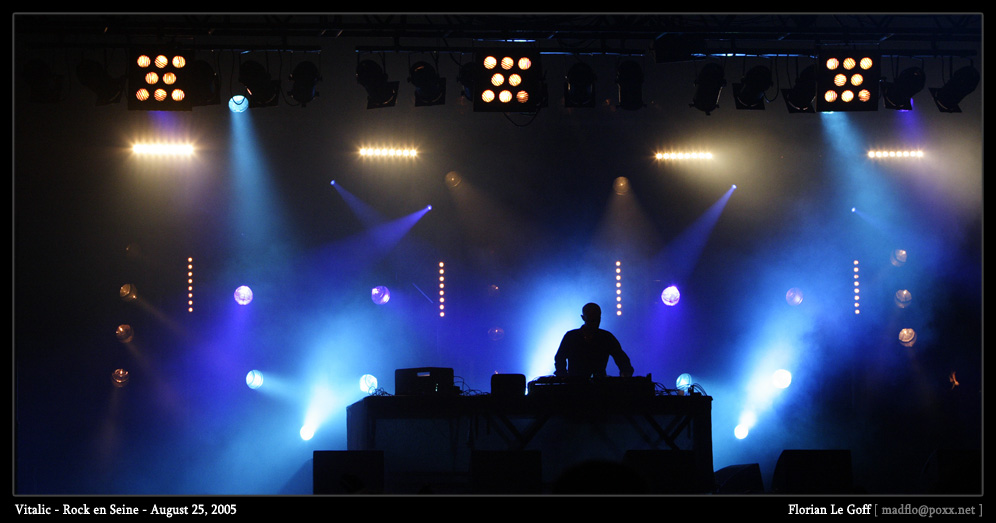
For those of you who don't know Frenchman Pascal Arbez aka Vitalic, he's one of the most talented Frenchmen to conquer and inspire Europe since Napoleon Bonaparte. When his debut four-song ‘Poney EP’ was first released in late 2001, he tore through dancefloors, just as Fischerspooner fever and electroclash madness were spreading across the continent. Last year, he released his long-awaited debut album, ’OK Cowboy’, which Vitalic describes the album as a mix of “dance music, experimental, organs and French music”. In fact, it's much more than that: the Windish Agency describes Vitalic's sound as the ultimate rush, the greatest high, the invincible metal disco warrior.

Now, this collective of French directors called Pleix (who did Basement Jaxx's Cish Cash and are absolute geniuses) produced this fantastic video of flying dogs to the exhilarating beat of Poney Part I. Unmissable! En passant, these guys came up with some other amazing stuff, of which my absolute favourite has to be this one...


Meanwhile, on the northern side of France (actually Belgium, it's the Netherlands to be precise), I came across the Kilimanjaro Darkjazz Ensemble, which describes itself as "a weird combination of the organic and the mechanic. Contrary to technophobes' beliefs that a soul has no machine. Jason Kohnen and Gideon Kiers started T.K.D.E. around 2000, principally as an audio/visual project remixing old movie classics like Murnau's Nosferatu or Lang's Metropolis, leading to a natural progression into producing this clash of organic and mechanic. Kiers is better known for his work with Telcosystems and Jason Kohnen as Bong-Ra". All brilliantly weird. You can listen to some of their amazing stuff here, here and here.

06 March, 2006

Why I hated Crash


What a funny world we live in. If you had been an extraterrestrial eavesdropping on America's most glamorous social event, the 78th Academy Awards, you'd be led to believe there are no racists in this part of Planet Earth, just as there are no homosexuals. Light years travelling and years observing this strange human race, and suddenly all your beliefs are turned on their heads. "What?!?? - you might say - Hang on a second! The two top films contending for the most prestigious prize, Crash and Brokeback Mountain, addressed exactly the topics of racism and homosexuality"!! Well, on the surface, yes, but underneath it, not at all. The second issue is easily dealt with: check this review by Lee Harris for example, which echoes the bold statement by Jake that this film was really about two straight men falling in love, or consider the fact that there are virtually no gay actors in Hollywood nowadays (yeah, right!). So, indeed, BBM talks about homosexuality as the mere physical act of a man having sex with another man, but NOT about homosexuals, or their identity in a homophobic world. Gays are barred from the movie just as they are from Hollywood's echelons. But since I LOVED Brokeback Mountain, I will not shoot my arrows at Ang Lee's masterpiece - not for the moment at least - and I will concentrate on explaining why I hated Crash so much.

Crash talks about racial relations in Los Angeles today. It boldly aims to do so in just under 2 hours - 113 minutes to be exact - by following the lives of 8 main characters as they part and collide in the space of 24 hours. By the end of the film, shaken and tormented by uneasy questions (do I love my Bosnian cleaner enough?!!?!), we are left wondering where it all came from, as the films offers no answers or solutions to the racial problem itself, but just a powerful glance at this human interconnexity that surrounds it. Gazing at this faux-Buddhist temple, in which the characters do not know how to communicate except when their racial hatred emerges from deep inside, we are told that what goes around comes around, that being racist is bad, that we are all racist at some point in our lives, and that we can avert this, if we just choose to.

Some have found this preaching tone annoying. Others have even been irritated at the moral assumptions of the director, arguing that "[...] the script is founded on the belief of any good liberal: [that] everyone in the world is a seething, hate-filled racist... except the filmmaker, of course, whose job it is to enlighten the American people". Oh how far from true. Paul Haggis does indeed know better, at least better than the idiotic right-wing above reviewer who'd better consider a career in the car-retail industry. And what he knows better about is how to clear the conscience of middle class America.

Crash dresses up as a moral film, but sends out a far more alarming, subtle and vicious message: that racism isn't after all a social malaise in LA (and in the entire US), which ensures the socio-economic structures of the country remain in the firm hands of the white dominant classes, but rather a personal mistake of circumstance, one that can be averted (or committed) easily in the height of a moment. THIS is what white middle class America wants to hear and believe, that after all, underneath, it is capable of showing affection to its Latino maids, of even hugging them when the pressure becomes too much. Let us forget about those thuggish white policemen savagely beating Rodney King to a pulp and about those terrible riots that followed and caused so much economic damage, frankly. These things don't happen in LA any longer. Now, why should they? After all, if a police officer shoots a black kid, it's a mistake committed by a confused and angelic-looking Ryan Philippe, and he wasn't even a racist!!!!


The powerful symbolism of the climatic crash scene, in which a heroic Matt Dillon (representing the cruder side of white male America) drags out of a burning car the beautifully terrified Thandie Newton (representing all black and otherwise minority-ethnic women), cannot be missed. He - the white lord - has been capable of really bad things, like viciously forcing his hands up her skirt just hours before the accident during a routine traffic stop, but ultimately, when the REALLY bad things happen, and the important decisions need to be made, he is there to save her and protect her, a redemptive move which absolves at once himself and all white male America. And must have made his mum so proud. Needless to say, Thandie Newton/black women do not have the luxury of a U turn like Matt Dillon/white men, but they gratefully or resentfully - depending on the circumstances - have to accept whatever scrap of meat they might throw at them.

So who is a racist at the end of the movie? No one. Full-time racists would behave in a totally coherent manner, the film suggests, and no one is THAT coherent in real life. We change our behaviour according to many different factors, which are too difficult to explain, dear audience. In this evolution of behaviours we at times display racist tendencies, but that's different altogether. So does racism exist in LA? Yes, of course. But no one is a racist as such. We can only blame circumstances if "stuff" happens. Now isn't that convenient? Isn't that a big "go and say 3 Hail Marys and all your sins will be forgiven"-type of approach? Isn't this spreading of blame across the whole board an absolutely irresponsible way of seemingly lifting any true responsibility off the shoulders of white America?

Well, it is for me, because just as Crash was screened in cinemas across the world, thousands of black, latino and otherwise mostly NON WHITE men and women were flushed down the gutters of New Orleans as Katrina played with the "circumstances" and "behavioural tendencies" that kept them all trapped inside the economic squalor and social hypocrisy of racial America. The contrast between the rose-tinted racial tensions of LA described by Crash against the backdrop of the monochromatic devastation of New Orleans could not be starker. But like the three proverbial monkeys, the Oscar judges and raving audiences chose to eliminate one of their senses so that they could deal more easily with the bi-dimensional reality offered by the cinema screen. The fact that the world out there is entirely contraddicting what we're seeing on screen is beyond the matter, because it's more comforting to believe in this humanised approach, it pleases our intellectual ego to think that society can be pulverised so minutely that in the end generalisations do not matter. The fact that these two old ladies dragging themselves and their few belongings in the murky waters of New Orleans are black - the film ultimately leads us to believe - while those sitting on the tank in the background are white is entirely coincidental: a crash between the atomised lives of contemporary Americans.


So here's my final question to those of you who loved the movie and think this is a well deserved Best Film award: did you love it because it gave you some real, hard answers about the planet in which you live, and the racial prejudices that forcibly shape the lives of most of its inhabitants? Or rather because it stroked your ego into believing that you too were part of this beautifully constructed and morally vacuous cinematic collision for the simple fact that you skin displays a tone of colour, making you feel - in the words of the eminent LA Times Film Critic Kenneth Turan - that you had done your moral duty and examined your soul when in fact you were just getting your buttons pushed and your preconceptions reconfirmed?

05 March, 2006

Because...


...today I felt like it was spring, and woke up early to go to Columbia Road Market, and bought lots of daffodils and two ENORMOUSLY HEAVY plants of bamboo!!!

03 March, 2006

2 new must sees...


Onstage at the ICA, Joanna Newsom cuts a singular figure. Playing songs from her Milk-Eyed Mender LP, she blends a delicate, deranged voice with lapping harp technique and otherworldly charm. Newsom and other breakthrough artists like Devendra Banhart are the tip of an emerging New Weird America scene. Check out this video.


Regina Spektor, bronx girl by way of moscow who writes songs for the piano, voice, drum stick, and guitar (sort of). Her influences: so much classical music, Bach, Mozart, Chopin and countless many more, The Beatles, Queen, Bob Dylan, Tom Waits, Bjork, Radiohead, Nirvana, Patti Smith, Billie Holiday, Luis Armstrong, Nina Simone, Ella Fitzgerald, Vladimir Vysotsky, Eminem, Leonard Cohen, John Lennon, David Bowie, The Velvet Underground, Edith Piaf, so much more rock, hip hop, jazz, punk and possibly you.

"Sounds like a young human trying to make some music..."

Awesome... check her site for two amazing videos and lots of cool stuff...

01 March, 2006

Fray Hortensio Paravicino

I fell in love with him when I saw him at the National Gallery a few years ago. Isn't that weird? I just felt this thumping noise in my chest, as my heart started racing and my breathing got heavier... And even though the room was full of tourists bouncing from one painting to another one, I felt like I was standing in a strange time bubble, just him and I, looking at each other.

I don't believe in reincarnation, but...

Nicaragua

hadn't had a chance to post anything on my blog about my recent trip to Nicaragua. Mainly because I spent the entire two weeks slaving away in the middle of nowhere in the mountains by the border with Honduras. and I don't mean slaving away with gorgeous tropical forests and stuff around to look at under the blazing sun. I mean slaving away in front of a computer in a damp closet of a tin house under uninterrupted drizzle and gushes of cold wind trying to lift the whole damn roof. oh, and LOTS of coffee. i know, you say, we love coffee, that exciting stuff that is our lifeline early in the morning and sometimes early in the evening too (showing my age, uh...?). but when it's not roasted, it smells rather different. and even when it is roasted, when that all you smell 13 hours a day, i tell you, you start longing for tea...

so here i arrive, having survived the absurd airport of miami after an encounter with this colombian taxi driver who was taking me to the dolphin mall to purchase a memory stick - only interpreter between my mac and pc of the organisation i am working with: "and where (all spanish of course) if i may ask is the shop WITHIN the mall where you are going to buy this thingy" - "hell knows mate!" - "why, you mean you didn't call? MAN THIS IS THE FUCKING U.S. YOU DON'T JUST TURN UP IN ONE OF AMERICA'S LARGEST MALLS WITH A FLIGHT IN 1 HOUR WITHOUT KNOWING WHERE THE FUCKING SHOP IS!!!"

i swear i thought he's kill me. like i offended his mother or something

and when i get to managua, this strange and faceless city, sprawling like a giant oil spill, all glittering signs and modern detached villas, i think "oh fuck".

the following morning i find myself bumping on the front seat of double cabin, as the suburbs give way to a sloaping savannah, then to a flat desert, and as the road starts winding up gentle hills then suddenly climbing up the rising sides of the mountains, i remember what the whole fuss is about. all around are coffee plantations and tropical woods, the screams of birds rising high above us, and as we enter the cloud line, all turns into a drizzling muck, of watery holes and muddy paths, and everything seems covered in this reddish stain, even the highest leaves of the highest trees, and I think again "oh fuck"...

Jinotega is a dump. there's no other way of putting it. only a few houses have proper roofs - one of which is my hotel thank god - most don't even have walls, only wooden boards tied together with some straw. the place is poor in a way i hadn't seen before. i saw the slums of dar es salaam and of santo domingo, but they are different. they are the urban poor, those who float around the riches of the city, and somehow reflect the glitter of the gold that is so close and yet so far... no, this is different. it's egalitarian and all encompassing. everyone seems to share in the misery, it's like nothing else really could exist, the technology and luxuries, why, here we only have this, we don't even know what it looks like, how can we miss it.

well, it's just a silly illusion. the telly is there to remind them - and us - of each other's existence. so i am not at all surprised when at first i am received with a slight detachment, overshadowed by the buyers from the US who are arriving on my same 4 wheel. at least they pay in cash. i bring the potential prospect of a possible grant from an extremely difficult donor. wow. cool man. and who are you again?

so this first night we are all sitting in the main hall, as rain is pouring on our heads, and there are all these women who have come down from the farms of the cooperative, rose-cheeked and excited, and sure enough, there is a stereo in the corner, and what is it playing...? you guess it. merengue and salsa. my dominican nightmare. i feel the blood pumping frenetically as one by one the buyers sitting at my side are picked from women and forced to dance with them. they won't want me... why, i don't bring any money! damn... she's coming straight at me... and that's when i think again oh fuck...


from that moment onwards i love the people, and even more when the following day a large group of japanese buyers arrive and are greeted with the same treatment (only worse) and decorations on the wall comprising large paper fans and centre-fold magazine cut-outs of japanese women in traditional costumes (where the fuck did they find those pictures?!?!). and i love the japanese for speaking better spanish than english and looking at me in complete amazement when i try to explain to them what the european union is...! they are really on a different planet!

the days start rolling away at increasing speed, me arriving at 8 in the office after eating beans and eggs for breakfast and feeling consequentially a little fragile, them slowly learning to work with me, and i don't mean professionally. their personalities begininng to shine through the kind gestures of formalised hospitality, mine slowly breaking free from the reservations of the first few days. they are all young, they love having a laugh, and by the end of the first week there's no reason to be concerned, i am on their side, not some strange tax inspector come to find the faults in the picture. and of all of them, one stands out high above them, despite her barely 5ft 2in height...

Fatima is the director of the cooperative, a short and plump woman of maybe 45, that undescribed age of those who have suffered too much, and her manners become slowly more interested in me as she gets to know me, as i ask and listen, and try too hard to amuse her, something she must not be used to. by the beginning of the second week, the first glimpses at her life start appearing. divorced from an alcoholic husband, two kids who give her headaches, a will of steel and lots of sadness behind those dark eyes. her father, a palestininan emigree' during the 1930s, had married her mother, from a tiny town called La Trinidad, not far from Jinotega in the north of the country. and there he had set up, buying a property in the old part of the town, never to return to that land on the other side of the ocean. she was born there, in this allendesque setting, radical at heart, inquisitive, compassionate.

we talked about the war a lot. and yet very little. there are things which are told through mirrors, and you don't really know how to tell the face from the mask that protects it.

so, 14 days later, i am back on double cabin to managua, sitting by edmundo like the first day, with another little bit of world in my heart, which i might see again, but most probably i won't. and after a day visiting some sites, climbing a spent volcano, looking at vast lakes that resemble the sea, i return to my hotel with the hot breeze of the night, reminding me of the beauty of the tropics, of the warmth of its people, of the harshness of its nature.

but the last memory of nicaragua is the following conversation with an american sitting by my table at breakfast the following morning, just before i head to the airport. i am hungrily devouring jared diamond's guns, germs and steel, which - following a great suggestion by some editor i am sure - has on the cover a gun and some viral cells, when he addresses me as follows:

"The butler did it!"
"Sorry?"
"Are you british?!?"
"No".
"The butler! He DID it!!"
i look at the cover unsure what he's talking about and realise the easy mistake.
"Ah, no! i see! it's not a detective story at all, it's about science, and let me tell you this one of the most amazing books you could read in your lif..."
"yeah, right. see ya"

and he walks off.